STL Science Center

STL Science Center

30 April 2011

Looking at Dimetrodon in a new way

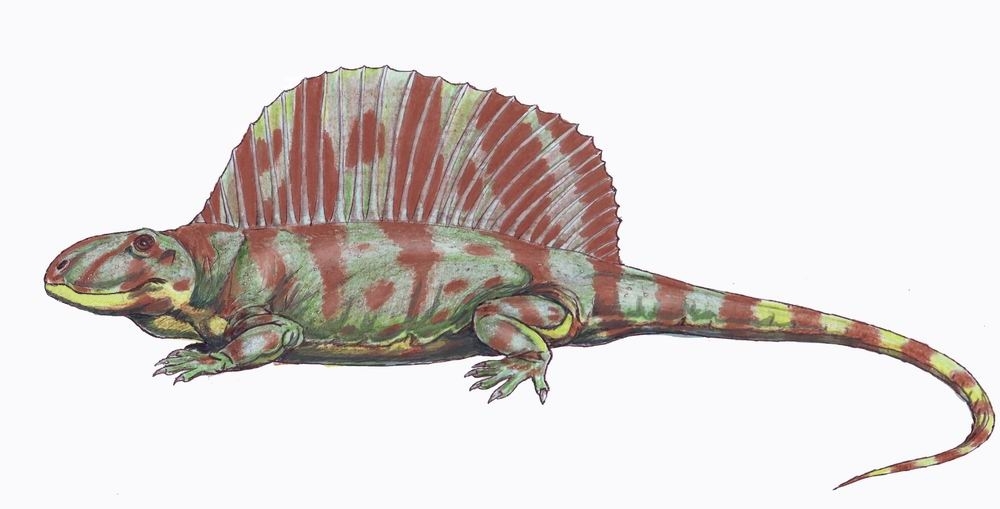
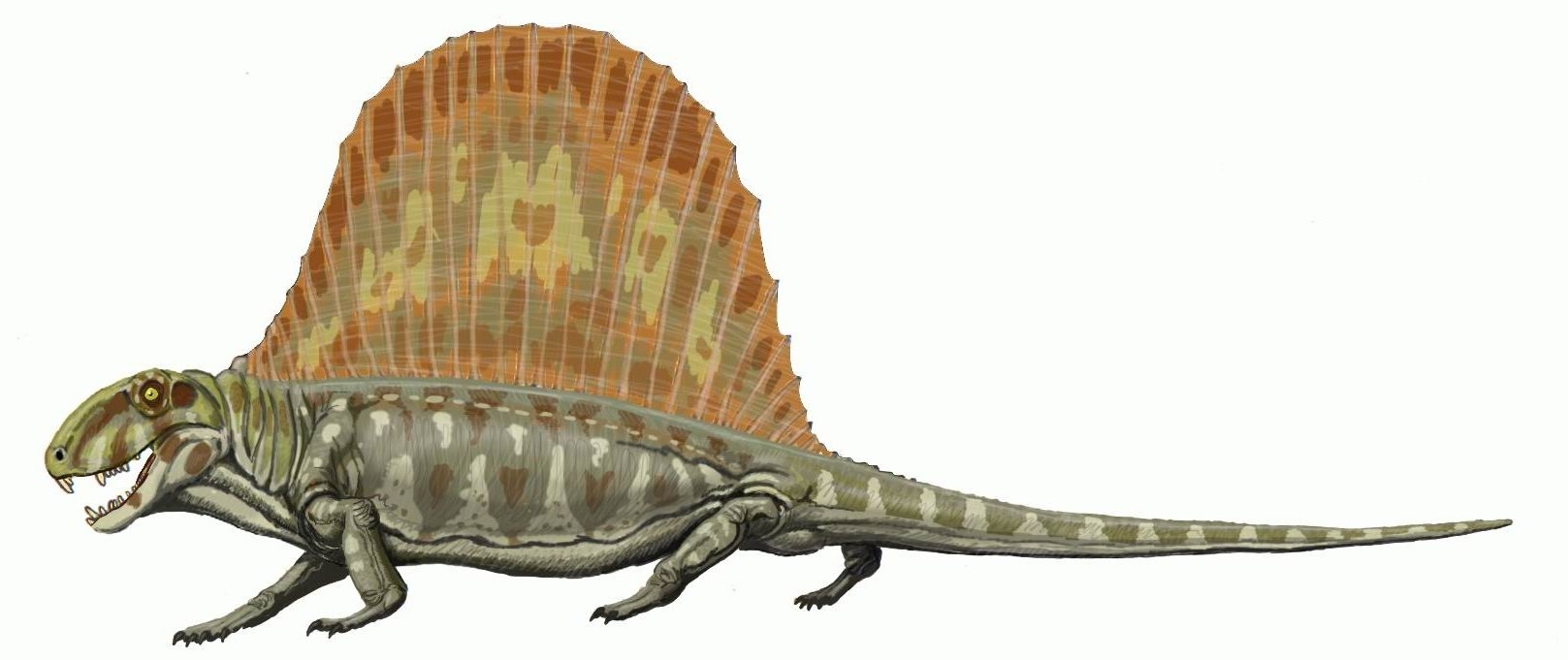
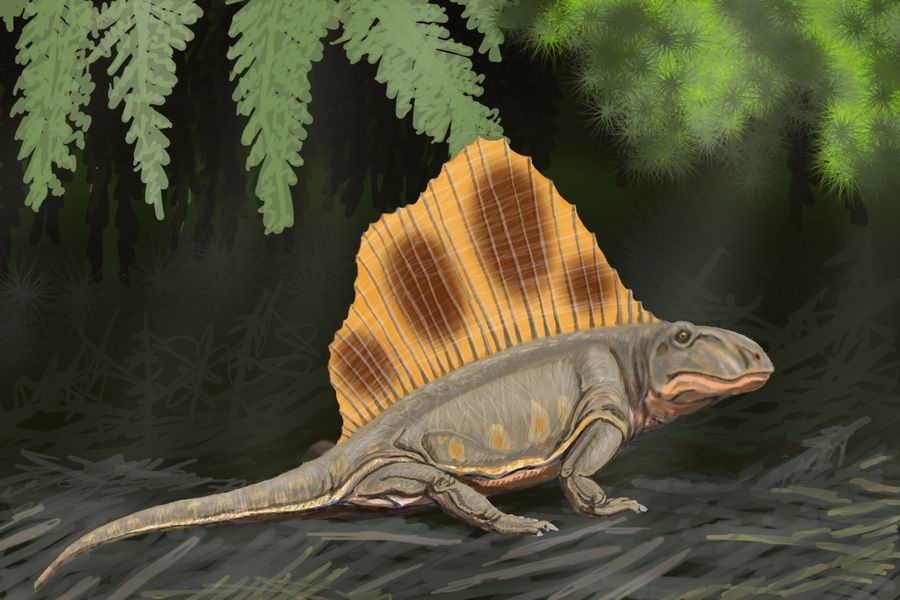
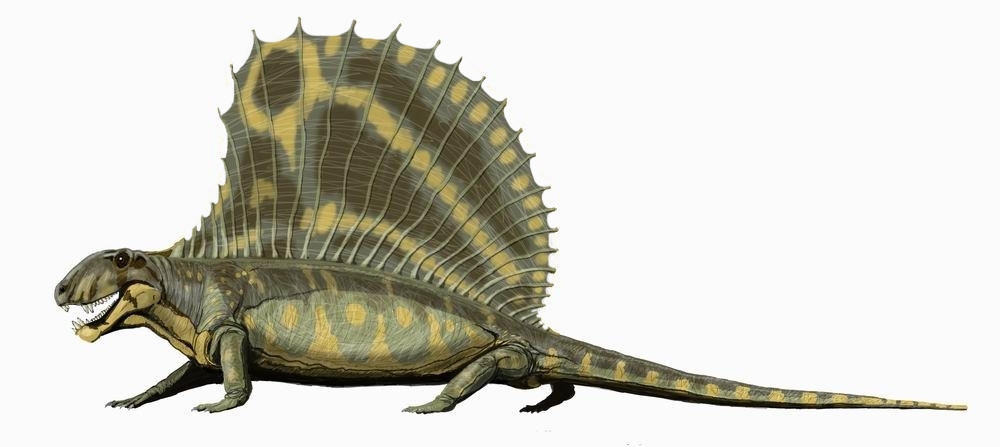
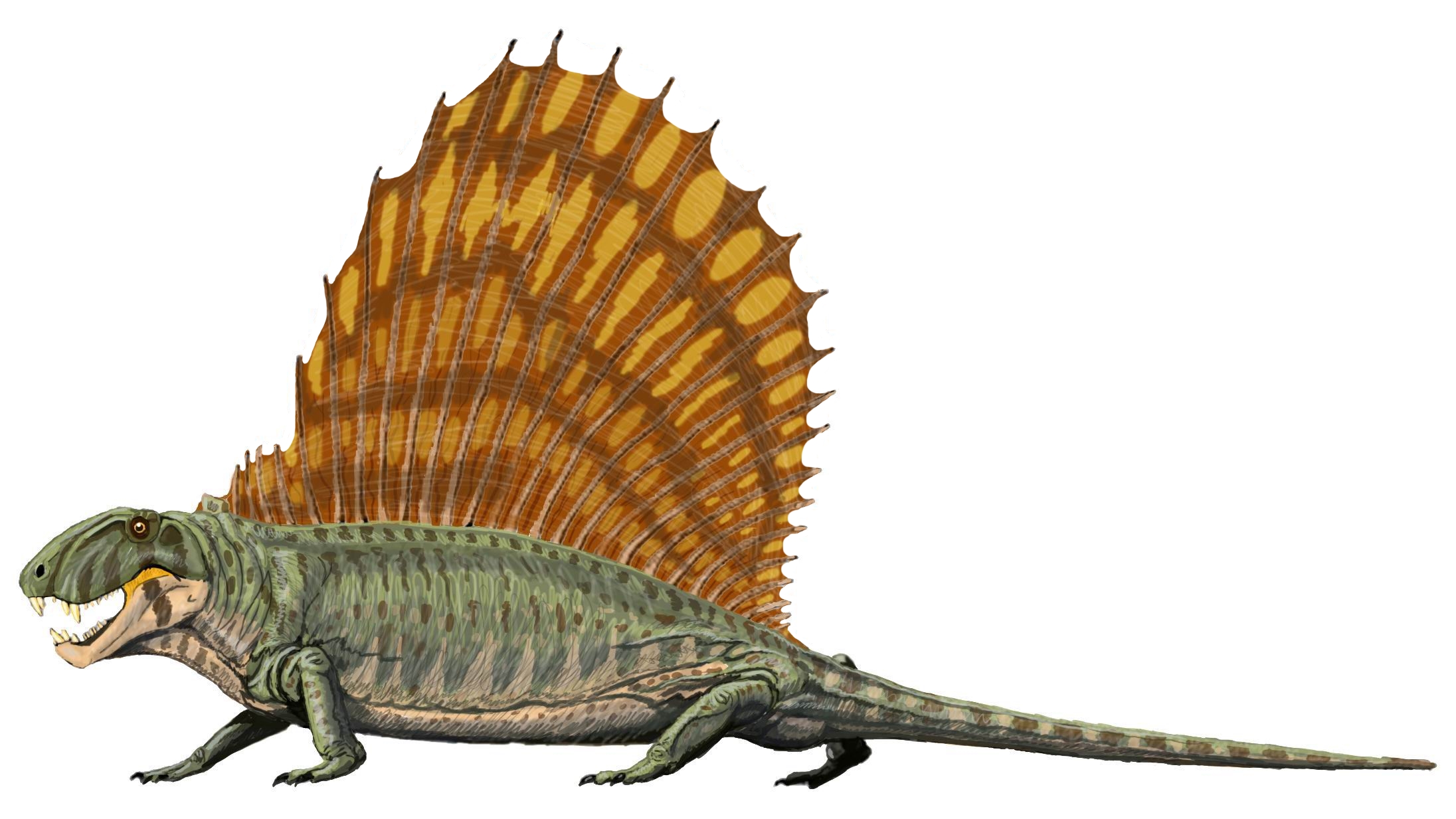
Dimetrodon, as with many of the animals we discuss here, is not a species but a genus. Therefore, there are actually numerous species under the genus name of Dimetrodon. Happily for us, though, we have the benefit of having years of research under us and can look pretty completely at most of the species. The typical iconic Dimetrodon species is D. grandis.
D. grandis was named early in the 20th century around 1907. This is about 30 years after the first 4 species were discovered and named, however, this remains one of the most easily recognized animals in paleontology. Another species that is we see a lot of is D. limbatus.
However, not all of the heads are like the two we've looked at and the sails found on the many species of Dimetrodon are certainly not identical. In fact, they are heavily varied, just like dinosaurs can be heavily varied. Here are a few more examples to look at:
D. natalis
D. milleri (another iconic looking animal)

D. loomisi
D. gigashomogonenes

29 April 2011

Announcement for May and the first of the specials

May starts Sunday. This May, starting this week, will be a special departure from the Mesozoic. This month we're going to feature five special vertebrates from the Permian Era. Therefore, our first May Special Entry is:
This special month begins with the classic Permian animal: Dimetrodon. An early mammal-like reptile, Dimetrodon was a pelycosaur; a type of synapsid (a group that includes mammals and is named by a small opening in the skull behind the eyes which forms a small arch) that evolved before more advanced therapsid mammal-like reptiles and way before current sets of mammals we see before us today, such as ourselves. The most noticeable feature of Dimetrodon is that glorious sail coming out of its back. The purpose of the sail has many theories but one of the most popular has been its use in thermoregularity. Though it is a mammal-like reptile it is still believed to have been "cold-blooded" or ectothermic. There has been a slight shift from this theory of using the sail to warm or cool itself however, and the idea of sexual reproduction has become a new key idea as the sail could have been a billboard for attractiveness in Dimetrodon.

In part we owe our multi-use teeth to animals like Dimetrodon, or "two types of teeth" as its name means. Dimetrodon was one of the first animals on the block sporting specialized teeth for tearing meat and chewing. If you've ever watched a lizard, such as an iguana, eat then you've seen them step on food to tear it, or perhaps the infamous crocodilian death roll?, and then swallow it whole. The first synapsids, like Dimetrodon, sporting its new version of dental batteries, were among the first animals to chew their food with teeth designed to do so and to tear up food for easier digestion. Next time you say grace include Dimetrodon and other early synapsids in your thoughts!

28 April 2011

Goodbye Tenontosaurus

As far as Tenontosaurus is concerned there isn't really much popularity aside from being mentioned as a main food source for dromaeosaurs. They do appear in many paintings and illustrations, but as far as toys, kids books, and movies, they just don't typically make it. A sad end for such a well known animal really considering that there are so many good specimens of the animal in collections. Maybe it's just too typical an animal, not bizarre enough to be noticed perhaps?

27 April 2011

A very short history of T. tilletti

Tenontosaurus was discovered by, surprise!, an American Museum of Natural History expedition in Montana in 1903. Barnum Brown went on to name the animal Tenantosaurus, "sinew lizard".  18 specimens were unearthed and in the 1960's John Ostrom dug out 40 more examples. His description was the first, and only, and his name, Tenontosaurus, is what stuck. It's really just a change in spelling from Barnum Brown's Tenantosaurus.

Ostrom and Deinonychus

26 April 2011

The very much written about Tenontosaurus.

Tenontosaurus has had so many papers written about it in the past it's difficult to find original papers online. They're more than likely mostly buried in archives. Newer research has called upon T. tilletti because it is so completely known in the historical record to compare newly found animals to other skeletons and thus aid in classifying new basal Iguanodonts. One such paper is here. Tenontosaurus has also been studied to determine sexual maturity in dinosaurs and is also featured in an article about ages and distributions of animals from Arizona.

25 April 2011

Movie Monday is not so good.


Tenontosaurus, for all of its mentioning in the paleo world, isn't heavily featured in documentaries even though its main predator, Deinonychus, is. There was an episode of Jurassic Fight Club that is proving difficult to get my hands wrapped around that featured this battle though. I've found the commercial for it but that's about it.

24 April 2011

Easter

Well I hope everyone gets one of these for Easter:

Tenontosaurus is probably not the best Easter basket citizen, but it was worth a shot. If you dare pull kids away from Easter candy today you can have them play with dinosaurs though! Or read this fact page maybe. Or perhaps color a picture.

23 April 2011

The nice side of Tenontosaurus

Happy 100th Dinosaur Related Post!

Let's look at a typical Tenontosaurus image by Raul Martin.
Copyright belongs to Raul martin
Notice the impending doom in the shape of two rather hungry leaping dinosaurs? Deinonychus' favorite snack is thought to be, and there is evidence of struggles between the two animals, our loving Tenontosaurus. This is typical of depictions of Tenontosaurus. Usually the claws are already in and there's blood flowing and the Tenontosaurus is dying, or is already dead and being eaten. I even found a painting that replaced the Deinonychus with an Acrocanthosaurus, so Tenontosaurs never really gets a break it appears. What this image doesn't show us, however, is the gentle side of the animal. All we ever seem to see is fear. The peaceful art that exists make it look like a cow.
There's a very hadrosaur look to these animals. This makes sense because Tenontosaurs are early Iguanodontians, which are themselves ancestors to the Styracosterna which includes the Hadrosauridae. That's a mouthful! In plain English Tenontosaurs are related to Iguanodon and both are early Ornithopods, the group which would later evolve into the Hadrosaurs Saurolophus, Lambeosaurus, Parasaurolophus, Anatotitan, etc.

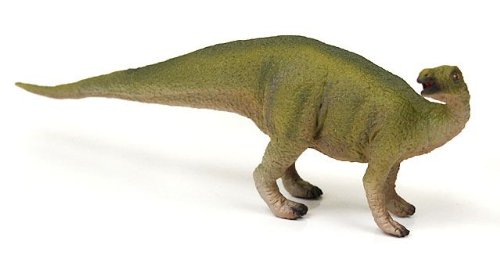
Tenontosaurus lived along that coast of inland sea we know of that stretched through the heartland of America. It had a grasping hand but lacked the enormous thumb spike of its cousin the Iguanodon. This image, therefore, is not sculpted correctly as the hand is actually quite slender and the five fingers actually show a bit of articulation, enough to grasp plant matter at the very least. However, as far as dinosaur safaris go, it is an interesting piece.
It's thought that Tenontosaurus, like many other nearly defenseless (=clawless, fangless, spike-less, armor-less) dinosaurs lived in herds, pods, gaggles, or flocks (whatever the chosen terminology would be). To that end the adult pod here
and the clearly seen family group in the center of Karen Carr's panorama piece here
show that group dynamic quite well. In Karen Carr's piece we also have a much more subtle and anticipated attack mounting which allows our imaginations to flow a great deal more than in pieces where the attack is already taking place. The alarm in the herd is evident, but they may not be able to see the two animals lurking in the foreground and have not yet panicked, showing a united front against the dangerous invader. Personally I love this piece.
22 April 2011

Snack time of the wee bitty sharp toed gods!

Yes, it is a sad truth that most of the times we hear the name of this week's dinosaur we are typically hearing about how it may have been attacked, killed, and eaten by the smaller theropods of its time; the deinonychosaurs (or maybe it's dromaeosaurs in general). Anyway, enough about being a snack and defenseless and all that. Everyone has a niche or they would not have evolved and they certainly would not have been born. Our task for the week, then, is to discover, explore, and figure out why this dinosaur was so tasty! Since its niche does seem to be being eaten. We will also, in the course of finding out "why so tasty?" discover what this animal ate, how it moved, what it looked like; the typical things we find out over the course of a week. Therefore, without too much further ado, I bring to you, the Tenontosaurus:

Together forever by IsisMasshiro
http://www.isisindex.net/
Here are some unmolested ones to look at too:

21 April 2011

Being popular

Popular culture is a crazy thing. We've seen that Tarbosaurus has made it into its own toys, documentaries, and books. I've shared a lot of those already too. I think since so much of the discussions this week have touched pop culture I'm going to make today a little short unless there are questions. We'll leave Tarbosaurus with a little video:
 

20 April 2011

Maleev in the desert.

I think we can put to bed the idea that Tarbosaurus and Tyrannosaurus are the same genus of animal. Gregory Paul seems to somewhat disagree with me as he lists it as Tyrannosaurus bataar in his newest book, but I'm convinced they're different enough animals. Another person who obviously disagreed with that idea is Evgeny Maleev, the man who dug the first remains out of the Mongolian desert. Maleev was a Russian scientist. He named other animals as well and cut open his T. bataar to exam its braincase, a topic best left to CT scans today. Maleev's conclusions on Tarbosaurus can be found here. He based his new genus on the skull's anatomy and the associated post-cranial skeleton (i.e. the body). As stated in the article comparing skulls yesterday, the entire animal was noticeably smaller than T. rex. If you didn't read the article yesterday you should!


Also, I'm excited today because my SVP membership has finally been processed!

19 April 2011

Tuesday Part II

So in response to that article, we can see that there are in fact many differences between T bataar and T rex. The skull shape alone is a great source of evidence to prove that they are related but not too closely that anyone should assume they belong to the same genus. T bataar was clearly more streamlined and had less power in his jaws, and had fewer teeth, but he clearly had different prey around him as well. Feel free to begin a discussion.

Part I of Tuesday

Jorn Hurum and Karol Sabath have done a fantastic job taking my very cursory overlook of the skulls of Tarbosaurus and its cousin and describing them bone by bone in comparison. A fantastic read! EA Maleev describes a new species of Tarbosaurus and some other new Mongolian animals. There are many more articles which mention Tarbosaurus, but these are the best that I wanted to share. This evening I'll revisit the first to discuss.

18 April 2011

A word on movie related Tarbosaurus stuff.


Tarbosaurus is a movie star, check it out above. Also, he's been in some documentaries that are posted below. Being such a fierce animal has its perks when it comes to being in the public eye. Think of all the animals that get movies made about them or are the stars of the show in movies or circuses or the zoo. The cute and lovable animals have their place, but the top predators are typically the most sought after spectacles. Tarbosaurus does not disappoint in this aspect in the documentaries it features in. Attacking much like a T rex is thought to have attacked; using its powerful jaw to snatch its prey and its powerful legs to stand its ground. However, in the first documentary we can see that this also places bipedal carnivores in precarious positions which may be lethal (here the animal is hit in the ankle, in Walking with Dinosaurs a T rex suffers a broken femur and dies, in the Big Al special the Allosaurus breaks its foot while chasing prey and dies from infection/starvation later on) while trying to take down heavily defended prey items.


17 April 2011

Tarbosaurus the child's play-thing

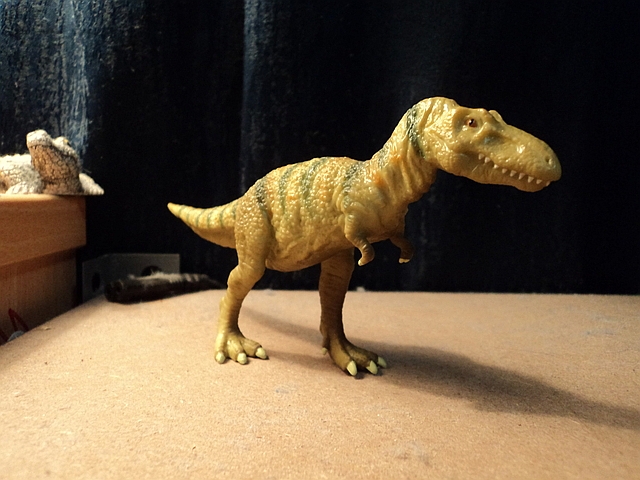
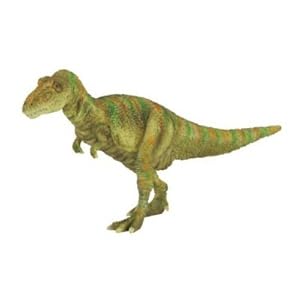
Tarbosaurus, like his cousin, is interesting enough to children, it seems, that we have our usual suspects. Fact sheets, a coloring page. This is a dinosaur that families can really spend some time with today! What about toys to play with? We have a few of those to check out too.


http://www.dinotoyblog.com/2010/10/19/tarbosaurus-procon-collecta/

http://www.amazon.com/Collecta-Tarbosaurus/dp/B002PJ6JYU

16 April 2011

Skulls of royalty

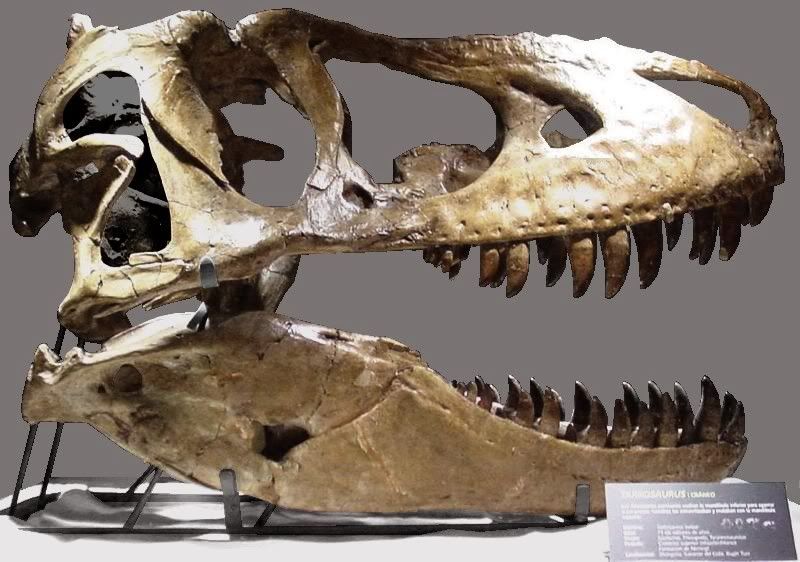
Tarbosaurus, despite being a relative of T Rex, actually looks a little more slender in the skull area.  I don't know the exact angles of the orbital fenestra and subsequent eye facing, but Tarbosaurus has a noticeably less stereoscopic ability than T Rex also, meaning the eyes face less forward in the skull than in T Rex. Compare, T Rex at the top, T. bataar at the bottom:
Sue at the Field Museum
Additionally, the slope of the muzzle in Tarbosaurus and T Rex is different. The T Rex slope over the nostrils being steeper and the frontal bone having a small dip which also makes the overall slope of the skull to the nostrils slightly steeper than that of Tarbosaurus. The dentary and surangular of the jaw are clearly larger in T Rex. Additionally, the palatal bone in Tarbosaurus juts much farther up into the view through the antorbital fenestra and orbital fenestra than it does in T Rex. Check it all out below, same order as above.
Either way, he's still a scary animal: 
 

15 April 2011

Cousin of the king

This week we're visiting Cretaceous China and Mongolia to look at a cousin of the largest and fiercest animal in North America at the same time (well this guy is about 3 million years older). Everyone give a big welcome to Tarbosaurus bataar!

14 April 2011

Scant pop culture

The impact of Brachylophosaurus on the popular culture world has been somewhat limited so far. Despite scientific popularity it just hasn't hit toy stores or children's books in any great force. There are examples however such as this book and there's even this beanie baby type plush.

13 April 2011

Charles M. Sternberg


The original skull of Brachylophosaurus was described in 1953 by Charles Sternberg though the fossil was found in 1936. From 1994 onward finds have been coming up somewhat regularly through Nick Murphy's team at JRDI, but Sternberg is the father of the species' name. Sternberg was responsible for a great amount of knowledge on Canadian dinosaurs up until 1981 despite never attending college and being a native of Kansas. He lived to be 96, which is quite a feat in itself of course, and in that time was responsible for describing Pachyrhinosaurus, Brachylophosaurus, Parksosaurus and Edmontonia.

12 April 2011

A wealth of literature

There are so many articles out there due to the recent finds of Brachylophosaurs. One article I'm going to highlight here is on microbial influences on soft tissue. Thanks to the finding of the mummified animals we can now study things like this and this paper will have an impact in all areas of science that deal with death possibly even including forensics, which is fascinating considering dinosaurs are the entities studied originally. The additional papers can be found in this search list from Google. Not all of these papers are going to be full articles, some are just stubs. However, you can always request articles from the publishers and authors.